
Peak Milk has always been a household name.
Even if you didn’t grow up consuming it, you have most likely heard of it somewhere, sometime, over the years.
That’s how familiarity works.
Now imagine this.
You’re in traffic.
You glance up.
A billboard catches your attention for just a second then you move on.
Hours later, you’re standing in a store, scanning through options.
Nothing feels particularly different, until one name stands out.
It feels familiar.
You don’t remember exactly where you saw it, but it lingers in your subconscious and you choose it.
So the question is:
Was that just visibility or was that influence?
Out-of-Home (OOH) advertising has evolved, but many brands are still measuring it with outdated thinking.
A screen is booked.
A location is premium.
Footfall is high.
So the assumption is simple: results will follow.
But in 2026, that assumption is no longer enough.
OOH does not deliver impact by default. It delivers impact when strategy, behaviour, context, and execution align in the real world.
To understand this better, it helps to move beyond theory and look at what actually happens on ground.
Visibility Alone Does Not Guarantee Impact
One of the biggest misconceptions brands still hold is that high traffic equals high performance.
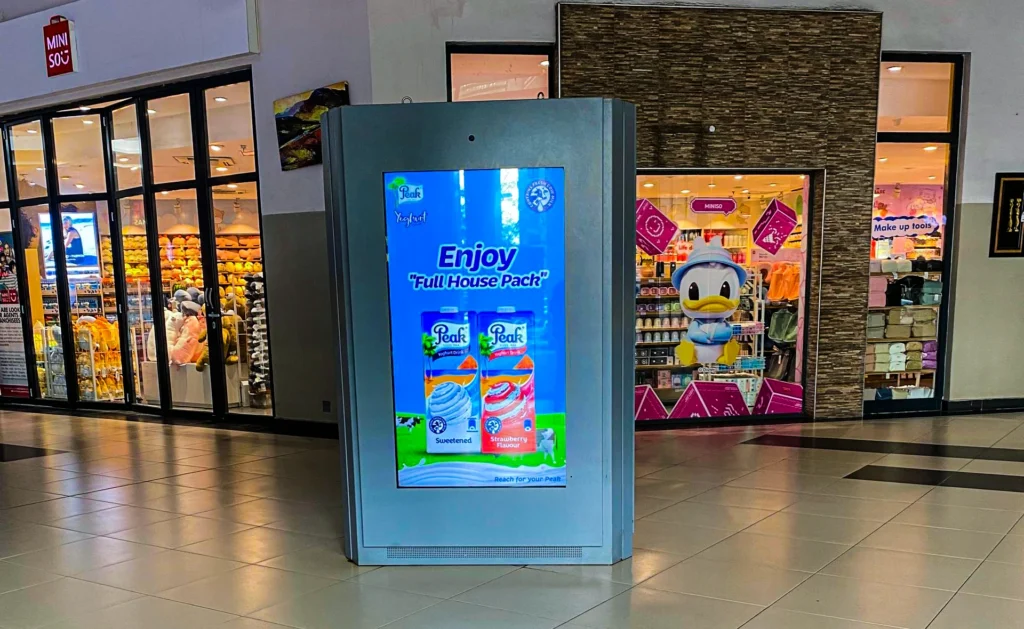
During a recent one-month campaign for Peak Milk at Festival Mall, the location delivered exactly what it promised: consistent, strong footfall.
Festival Mall is a high-activity retail environment:
- steady weekday traffic
- significantly higher weekend volume
- a mix of families, young adults, and working professionals
But what became clear early in the campaign was this:
Not all visibility is equal.
Footfall data and on-ground observation showed:
- evening periods (4pm–8pm) had the highest concentration of engaged viewers
- weekends delivered longer dwell times, especially around leisure and food areas
- midday traffic was faster-moving, with lower attention levels
The result?
The campaign didn’t just perform because people passed, it performed best when people had time to notice.
Visibility created reach.
Dwell time created impact.
Audience Behavior Is Not Uniform And Brands Ignore This
Many brands treat audiences as a single group.
But in physical environments like malls, behaviour shifts constantly.
At Festival Mall, the Peak Milk campaign revealed clear behavioural segments:
- Transit audience (entrances, walkways): fast-moving, low attention span
- Leisure audience (food court, seating areas): slower pace, higher engagement
- Shopping audience (retail clusters): visually alert, decision-oriented
This had a direct effect on how the campaign was experienced.
For example:
- In high-movement zones, only bold visuals and strong branding registered
- In high-dwell zones, audiences engaged more deeply with product imagery and messaging
Simplicity Outperforms “Creative Complexity”
Another common mistake is overloading OOH creatives.
In theory, more information feels useful.
In practice, it reduces effectiveness.
During the Peak Milk campaign, the brand-provided creative delivered:
- clean, product-focused visuals performed better in recall
- minimal text formats were easier to process in motion
- strong colour contrast improved visibility across distances
More detailed creatives, even when well-designed required more effort to process and were less effective in fast-moving zones.
The learning was clear:
OOH does not reward effort from the audience. It rewards clarity from the brand.
Context Shapes Meaning More Than Brands Expect
The same creative can perform differently depending on where it appears.
At Festival Mall, placement influenced perception significantly.
Key observations:
- Screens closer to food and refreshment areas aligned naturally with the Peak Milk product, increasing relevance
- Screens within retail-heavy zones benefited from strong brand familiarity and visual recall
- Screens near entry points were effective for awareness, but not deep engagement
This highlights an often overlooked truth:
OOH is not just media placement, it is environmental storytelling.
Where the message appears changes how it is received.
Repetition Builds Recognition Faster Than Expected
OOH’s strength goes beyond exposure it is repetition within routine.
Over the one-month period, a noticeable pattern emerged:
- frequent visitors showed increased brand recognition over time
- the campaign moved from “seen” to “familiar” within weeks
- visual consistency reinforced memory even without active attention
By the third and fourth weeks, the brand presence felt embedded in the environment.
Execution Quality Directly Affects Performance
One of the most underestimated factors in OOH is execution.
At a high-traffic location like Festival Mall:
- peak periods are unforgiving
- visibility windows are short
- attention is highly competitive
This means:
- screens must maintain consistent uptime
- content must display clearly and accurately
- transitions must be seamless
Any disruption during peak periods translates directly to lost opportunity.
The Peak Milk campaign reinforced this reality:
Great strategy and creative mean little without flawless execution.
Impact Is Measured Beyond Impressions
Many brands still rely heavily on impression-based metrics.
But real OOH impact is more nuanced.
From this campaign, stronger indicators included:
- dwell time patterns
- repeat exposure frequency
- time-of-day engagement differences
- environmental alignment with the product
These factors revealed how the campaign was experienced not just how many people passed.
What Actually Drives OOH Impact in 2026
The Peak Milk campaign at Festival Mall reinforces a broader shift in how OOH should be approached.
Impact today is driven by:
- understanding real audience behaviour, not assumptions
- designing for context, not just visibility
- prioritising clarity over complexity
- leveraging repetition within routine environments
- maintaining execution excellence at all times
- measuring engagement conditions, not just impressions
Final Thought
OOH has never been only about visibility and in 2026, that distinction matters more than ever.
The brands that succeed are not the ones with the biggest screens or busiest locations.
They are the ones that understand:
- how people move
- when they pay attention
- what makes them pause
- and how presence turns into memory
Because real impact in OOH does not come from visibility alone.
It comes from being relevant in the exact moment the audience is ready to notice.
Written by:
Alaneme Lauretta