
Out-of-Home (OOH) advertising remains one of the most effective ways for brands to stay visible in the real world. From billboards and digital screens to transit advertising and mall displays, OOH gives businesses the opportunity to connect with people in their everyday environments.
But before most brands commit to an outdoor campaign, they usually have important questions and rightly so. Every business wants to know whether their investment will truly deliver visibility, relevance, and results.
Over the years, we have noticed that certain questions come up repeatedly from clients planning OOH campaigns.
Here are some of the most common questions, along with the honest answers brands should know before investing in outdoor advertising.
“Will People Actually See Our Advert?”
This is usually the very first question clients ask.
The simple answer is yes, but visibility depends heavily on location.
One of the biggest misconceptions about outdoor advertising is that placing a billboard anywhere automatically guarantees results. In reality, OOH works best when your brand is positioned where your target audience already spends time.
Advertising is not just about traffic volume. It is about audience relevance.
For example, a skincare brand may perform better in premium malls, gyms, business districts, or lifestyle environments where beauty-conscious consumers are more likely to engage with the message. A food or household brand, however, may gain stronger visibility near open markets, busy roads, transport hubs, or densely populated commercial areas.
The real strength of OOH advertising comes from repeated exposure. People often pass the same billboard or digital screen every day during their normal routines. Over time, that repetition strengthens familiarity and brand recall.
This is why strategic placement matters more than simply choosing the biggest screen or the busiest road.
A smaller but highly targeted location can sometimes deliver stronger results than a larger placement in the wrong environment.
Good OOH advertising is not about being everywhere. It is about being visible in the right places.
“How Do We Measure Results?”
This is another common concern, especially in a digital age where brands are used to instant clicks, likes, and online analytics.
The truth is that OOH advertising works differently from digital advertising. Its primary role is visibility, awareness, credibility, and long-term brand recall.
However, modern OOH is far more measurable than many people realize.
Today, brands can access campaign insights such as:
- Audience estimates
- Footfall data
- Traffic counts
- Impressions
- Daily reach estimates
- Visibility studies
For example, mall advertising screens can provide estimated foot traffic numbers, while roadside billboards may be evaluated using road traffic movement statistics and vehicular counts.
Brands can also measure campaign impact indirectly through:
- Increased customer inquiries
- Higher website traffic
- Improved social media engagement
- More walk-in customers
- Stronger brand awareness (via surveys and research)
- Sales growth during campaign periods
In many successful campaigns, OOH advertising works alongside digital marketing. A consumer may first notice a brand on a billboard and later search for it online or engage with it on social media.
While OOH may not always provide immediate conversion metrics like digital ads, its impact on visibility and public awareness can be incredibly powerful.
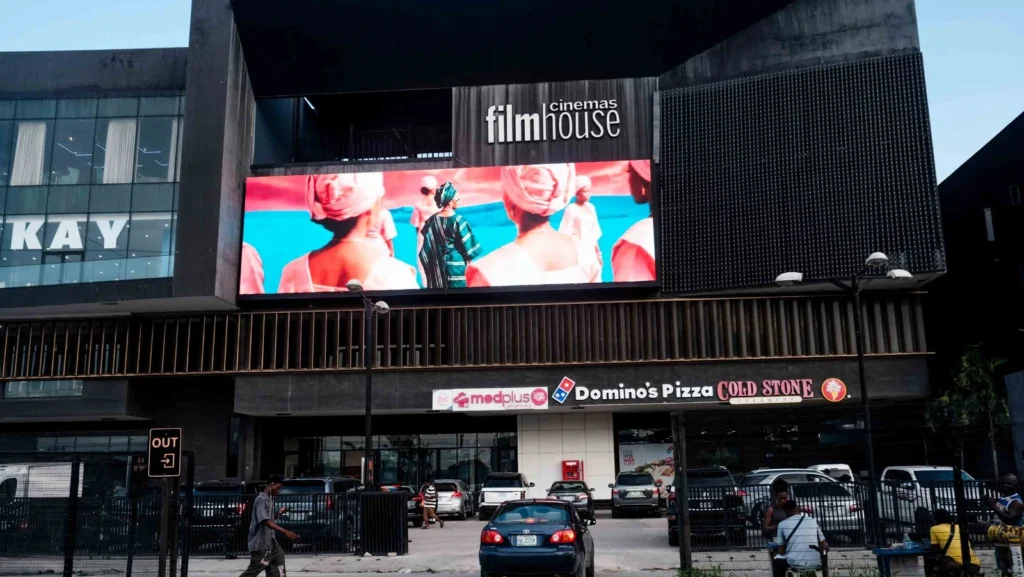
“Is OOH Advertising Only For Big Brands?”
One of the biggest myths in advertising is that outdoor advertising is only for multinational companies with massive budgets.
That is simply not true.
OOH advertising can work effectively for both large and small businesses. What matters most is strategy.
A well-positioned campaign in one strong location can sometimes outperform several weak placements. The key is understanding:
- Who the target audience is
- Where they spend time
- What message will attract attention
- Which locations best support the brand
Smaller businesses can still achieve meaningful visibility through:
- Strategic billboard placements
- Digital Out-of-Home (DOOH) screens
- Mall advertising
- Transit advertising
- Community-focused campaigns
- Short-term campaigns in high-traffic areas
Digital screens, in particular, have made OOH more flexible because brands can now run campaigns for shorter durations across multiple locations without the cost of long-term billboard ownership.
Visibility itself builds credibility. Consumers naturally trust brands they repeatedly see in public spaces.
OOH advertising is not only for large corporations. It is for businesses that want to stay visible and competitive.
“What Makes One Location Better Than Another?”
Not all billboard locations offer the same value.
A premium location is valuable because of audience quality, visibility conditions, movement patterns, and frequency of exposure.
When evaluating a location, factors such as the following matter:
- Traffic volume
- Audience demographics
- Viewing distance
- Traffic speed
- Visibility angle
- Environmental distractions
- Consumer relevance
For example, a billboard positioned along a heavily congested road may generate stronger engagement because commuters spend more time viewing the advert while in traffic.
Similarly, a digital screen inside a busy shopping mall may work better for retail or lifestyle brands because consumers are already in a buying environment.
Audience relevance is critical.
A premium location for one brand may not necessarily work for another. A luxury real estate campaign may perform best in upscale business districts, while a mass-market consumer product may benefit more from locations near open markets or transport hubs.
This is why media planning is so important in OOH advertising.
Strong campaigns are built around audience movement and consumer behavior, not random placement.
“How Long Should An OOH Campaign Run?”
Another question clients frequently ask is how long their campaign should remain active.
The honest answer is that OOH advertising works best through consistency and repetition.
Consumers rarely make decisions after seeing a billboard only once. The more often people encounter a brand in their daily environment, the stronger the brand recall becomes.
Campaign duration usually depends on:
- Budget
- Campaign objectives
- Product category
- Audience behavior
- Seasonality
- Location type
Short-term campaigns can work effectively for:
- Product launches
- Promotions
- Events
- Seasonal campaigns
- Festive campaigns
However, brands seeking stronger awareness and long-term visibility usually benefit from maintaining a consistent outdoor presence over time.
OOH advertising is rarely a one-week solution. Like most forms of marketing, consistency tends to produce stronger long-term results.
“What Makes A Good OOH Creative?”
Many clients focus heavily on securing locations but underestimate the importance of creative execution.
Even the best billboard location can fail if the creative is weak.
Outdoor advertising is different from social media or website design because people usually view billboards quickly, sometimes within only a few seconds.
This means OOH creatives must be:
- Bold
- Clear
- Simple
- Easy to read
- Visually strong
One of the biggest mistakes brands make is overcrowding billboards with too much information.
Consumers driving past a billboard cannot stop to read long paragraphs.
Strong OOH creatives usually contain:
- One clear message
- Large readable fonts
- Minimal text
- Strong visuals
- Clear branding
- A memorable call-to-action
Good billboard design is not just about looking attractive. It directly affects campaign performance.
The best OOH creatives communicate quickly and leave lasting impressions.
“Can OOH Advertising Still Work In A Digital World?”
This is one of the most important questions brands ask Today.
With the rise of social media and digital marketing, some businesses wonder whether outdoor advertising is still relevant.
The answer is yes, and in many ways, OOH advertising has become even more valuable.
Consumers Today are constantly exposed to digital content. Online adverts compete aggressively for attention, and many people actively ignore or skip them.
OOH advertising works differently because it exists in physical environments. Consumers cannot simply scroll past a billboard or skip a roadside digital screen.
Outdoor advertising creates unavoidable visibility.
Whether people are commuting, shopping, exercising, or attending events, OOH remains part of the environment around them.
Modern OOH has also evolved through Digital Out-of-Home (DOOH) technology, allowing:
- Dynamic content
- Animated visuals
- Flexible scheduling
- Real-time updates
- Multi-location campaigns
Today, many successful campaigns combine OOH and digital advertising together. A consumer may first notice a brand outdoors and later engage with it online.
That combination strengthens visibility and improves overall marketing performance.
“What Should We Expect From An OOH Media Partner?”
A strong OOH media partner should offer more than just advertising space.
Brands should expect:
- Strategic guidance
- Audience-focused planning
- Transparent pricing
- Reliable campaign execution
- Campaign monitoring
- Proper reporting
- Consistent communication
Clients should also expect honesty and professionalism.
Not every location works for every campaign, and a strong media partner should prioritize effectiveness over simply selling available inventory.
Execution quality matters significantly. Technical problems, poor maintenance, damaged billboards, or screen issues can negatively affect campaign performance and brand perception.
A professional media partner should actively monitor campaigns to ensure strong display quality throughout the campaign period.
Strong media partnerships are built on trust, transparency, communication, and execution.
Final Thoughts
At the end of the day, successful OOH advertising is not just about placing adverts in public spaces.
It is about placing your brand in environments where attention already exists.
OOH advertising works because people live in the real world. Consumers commute daily, visit malls, shop in markets, attend events, and constantly interact with physical environments.
Brands that position themselves strategically within these spaces gain continuous visibility.
And visibility creates familiarity.
Familiarity builds trust.
And trust influences consumer decisions.
The most effective OOH campaigns are not necessarily the biggest or the most expensive. They are the campaigns built around strategy, audience relevance, strong creatives, proper execution, and consistent visibility.
Before launching any campaign, brands should ask questions. Good questions lead to smarter decisions.
And honest answers help businesses invest more wisely.
At its core, OOH advertising is not simply about being seen.
It is about being remembered.
Written by
Joseph Johnson